- Home
- What Are Essential Oils?
- Geranium Essential Oil
Discover Geranium Essential Oil
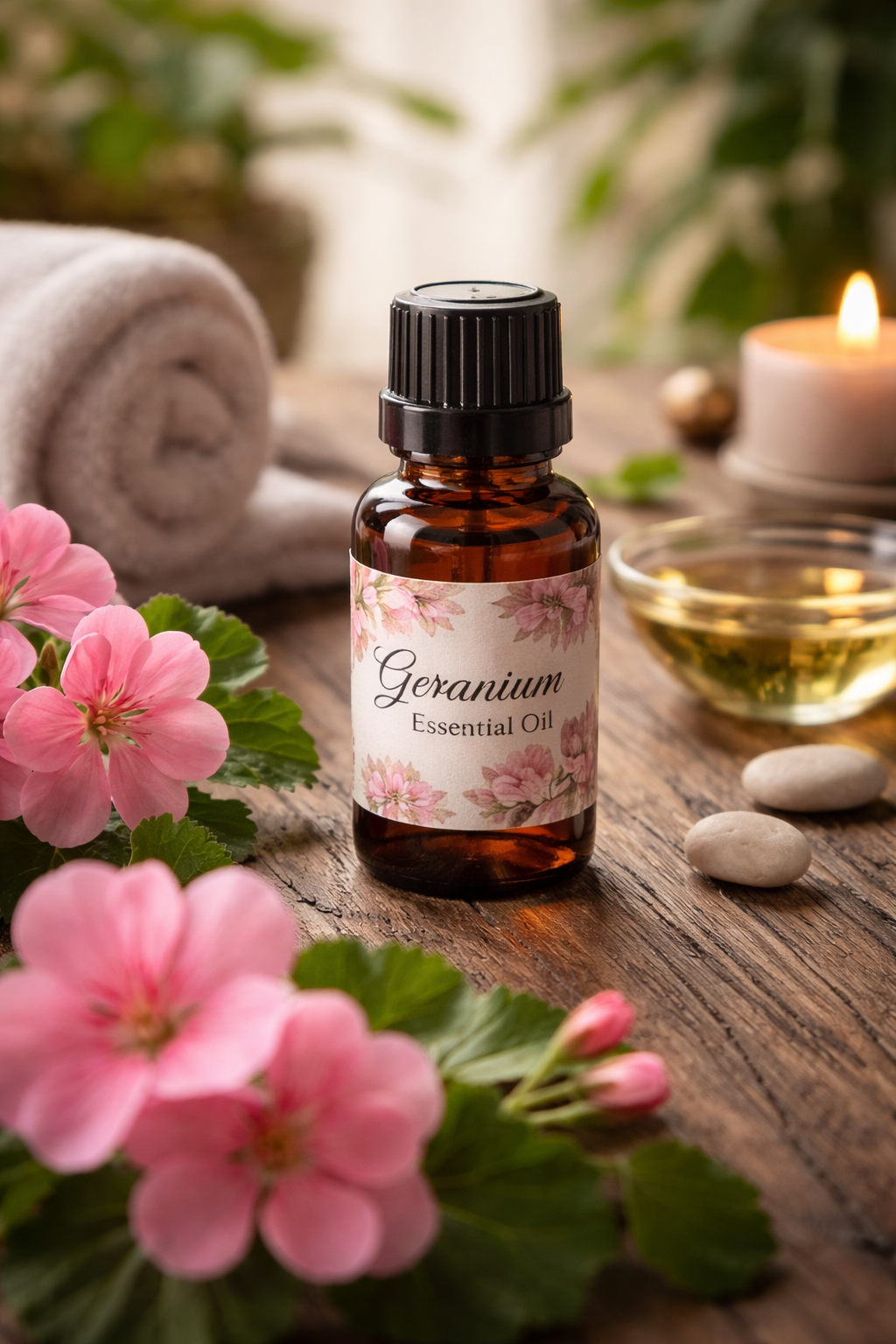
Geranium essential oil has occupied a distinctive place in traditional medicine, household remedies, and aromatic practice. Extracted from the leaves and flowers of Pelargonium graveolens, a plant native to southern Africa, this oil has long been valued not only for its pleasant floral aroma, but also for its reputation as a balancing and harmonising botanical.
Historically, geranium was used in regional herbal traditions for skin care, emotional steadiness, and general wellbeing. Its scent—often compared to rose, yet greener and more herbaceous—made it especially popular in perfumery and early cosmetic formulations. Long before modern chemical analysis, practitioners observed that geranium preparations tended to support equilibrium rather than stimulation, making them suitable for a wide range of everyday uses.
Today, geranium essential oil remains popular because it aligns with a growing preference for gentle, multifunctional wellness tools. Rather than acting as a quick or aggressive intervention, geranium is appreciated for its steady, adaptable nature—bridging skincare, emotional support, aromatherapy, and household use in a single oil.
What Is Geranium Essential Oil?

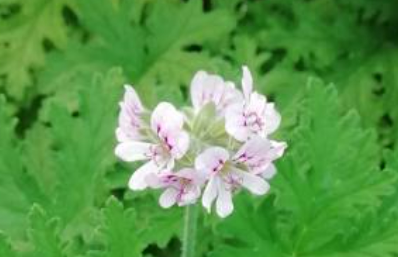
Geranium essential oil is a steam-distilled oil derived primarily from the leaves—and occasionally the flowers—of Pelargonium graveolens, commonly known as rose-scented geranium. Although often marketed simply as “geranium,” it is botanically distinct from the ornamental geraniums grown in gardens and belongs to the Pelargonium genus rather than Geranium sensu stricto.
The oil is valued in both perfumery and plant-based wellness for its complex aroma and its broad functional profile. As a result, it commonly appears in cosmetics, natural skincare formulations, and aromatherapy blends associated with skin clarity, gentle antimicrobial care, and emotional balance.
Botanical Source and Origins
Pelargonium graveolens is indigenous to South Africa, where it thrives in temperate regions with well-drained soil and ample sunlight. Over time, cultivation spread to North Africa, the Mediterranean, Reunion Island, and parts of Eastern Europe, the Middle East, and India. Each region produces oils with subtle aromatic and compositional differences shaped by climate, soil conditions, altitude, and harvest practices.
Modern chemical profiling has shown that geranium oils can vary notably in their citronellol-to-geraniol ratios and overall terpene balance. These differences influence both fragrance character and functional breadth. Even within a single country, oils distilled from higher-altitude or drier growing conditions may display increased levels of certain aromatic alcohols, contributing to a brighter or more rose-like profile.
Traditional Uses
Across cultures, geranium has long been associated with:
- Skin care and cosmetic preparations
- Emotional balance and mood support
- Household fragrance and insect deterrence
- Women’s wellness and menstrual-comfort traditions
Its adaptability across both personal care and domestic settings contributed to its enduring popularity. In parts of North Africa and the Middle East, for example, geranium leaves were infused or crushed into washes for irritated skin and minor wounds, while in southern Africa aromatic waters and oils were used to freshen living spaces and linens.
In many folk traditions, geranium preparations were described not as dramatic remedies, but as stabilising agents—supporting moderation in both skin responses and emotional states. This steady, regulating role continues to shape how geranium oil is used today.
How Is Geranium Essential Oil Extracted?
Harvesting the Raw Material
Geranium plants typically reach harvest maturity within several months and can be cut multiple times per year when managed responsibly. Leaves and flowering tops are harvested during periods when aromatic compounds are most concentrated—often during early flowering or full bloom, depending on the desired oil profile.
Responsible producers prioritise:
- Sustainable harvest cycles and plant-age management
- Minimal soil depletion and erosion
- Rapid processing to preserve volatile aromatic compounds
Because geranium regenerates readily and is often grown by small-scale farmers, it is generally considered a relatively sustainable aromatic crop when cultivated with care.
Distillation Process
Geranium essential oil is extracted primarily through steam distillation, a method well-suited to preserving delicate aromatic constituents without introducing solvent residues. Some producers employ variations such as hydrodistillation, which can subtly influence yield and fragrance balance.
In general terms:
- Fresh plant material is cleaned and loaded into a distillation chamber
- Steam passes through the leaves and flowers, releasing volatile oils
- Vapour condenses back into liquid form
- Essential oil separates naturally from the aromatic water (hydrosol)
- The oil is collected, filtered, and often quality-tested
Distillation technique matters, as excessive heat or prolonged processing can alter aroma and reduce overall quality.
Chemical Composition of Geranium Essential Oil
Geranium essential oil contains a complex mixture of naturally occurring compounds that shape both its aroma and its traditional uses. Analyses consistently identify citronellol and geraniol as dominant constituents, alongside smaller amounts of linalool, citronellyl formate, and related esters.
Key Compounds
- Citronellol – contributes a soft, rose-like floral note and is associated with insect-repellent and antimicrobial activity
- Geraniol – studied for antimicrobial and antifungal properties and valued for its warm floral aroma
- Linalool – commonly linked to calming and soothing effects
- Citronellyl formate – adds sweetness and softness while contributing to overall balance
Rather than acting in isolation, these compounds work together, producing geranium’s characteristic harmony between floral sweetness and green freshness. These properties are based on laboratory studies and traditional use; individual responses may vary.
Potential Health and Wellness Benefits

Traditionally Recognised Uses
Historically, geranium oil has been used to support:
- Emotional steadiness and calm
- Skin tone, clarity, and minor irritation care
- Relaxation during periods of stress
- General hygiene through aromatic washes
Its reputation rests on consistent cultural use rather than immediate or dramatic effects.
What Modern Research Is Exploring
Contemporary research continues to explore geranium oil for:
- Anti-inflammatory and antioxidant activity
- Supportive skin-care applications
- Stress-related nervous-system responses through aroma exposure
These findings are largely based on laboratory, animal, and small human studies. Geranium essential oil should be viewed as a complementary wellness tool.
Geranium essential oil for Hormonal Support
Geranium essential oil is often associated with hormonal balance, particularly in women, and has long been used in traditional and aromatherapy practices to support the endocrine system. It is commonly included in blends aimed at easing hormonal fluctuations linked to PMS and menopause, such as mood changes, irritability, and feelings of physical discomfort.
Some observational and small-scale studies suggest that inhalation of geranium oil may influence hormonal markers, including salivary estrogen levels in perimenopausal women, which may help explain its reputation as a harmonising oil. In practice, geranium is frequently used in aromatherapy massage, abdominal blends, diffusers, or warm baths to promote both emotional steadiness and physical comfort during hormonally sensitive phases of life.
While generally considered gentle and well tolerated when properly diluted, geranium essential oil should be viewed as a complementary support rather than a treatment, offering a nurturing, balancing presence through the natural rhythms of a woman’s life.
The Best and Safe Ways to use Geranium Essential Oil
🌸 Aromatherapy:
Diffuse 3–5 drops to create a gently uplifting, calming atmosphere.
🌸 Topical Application:
Dilute to 1–2% in a carrier oil before applying to skin. Lower dilutions are recommended for sensitive skin.
🌸 Bath and Massage:
Always pre-dilute in a carrier or dispersant before adding to bathwater. Patch test before massage use.
🌸 Inhalation:
Use briefly and cautiously; avoid prolonged close-contact inhalation.
⚡️ Safety Notes:
- Do not apply undiluted to skin
- Avoid contact with eyes and mucous membranes
- Use caution during pregnancy unless advised by a professional
- Do not ingest
What Does Geranium Essential Oil Smell Like? 🌸
The smell of geranium essential oil is often described as sweet, floral, and slightly minty or herbaceous. It has a fresh, uplifting scent that is similar to rose, but with a slightly more herbal or green note. Some people also describe geranium essential oil as having a citrusy or fruity undertone.
This aromatic complexity explains its long-standing role in perfumery, where it serves as a versatile floral heart note.
What other essential oils does Geranium Essential Oil blend well with?
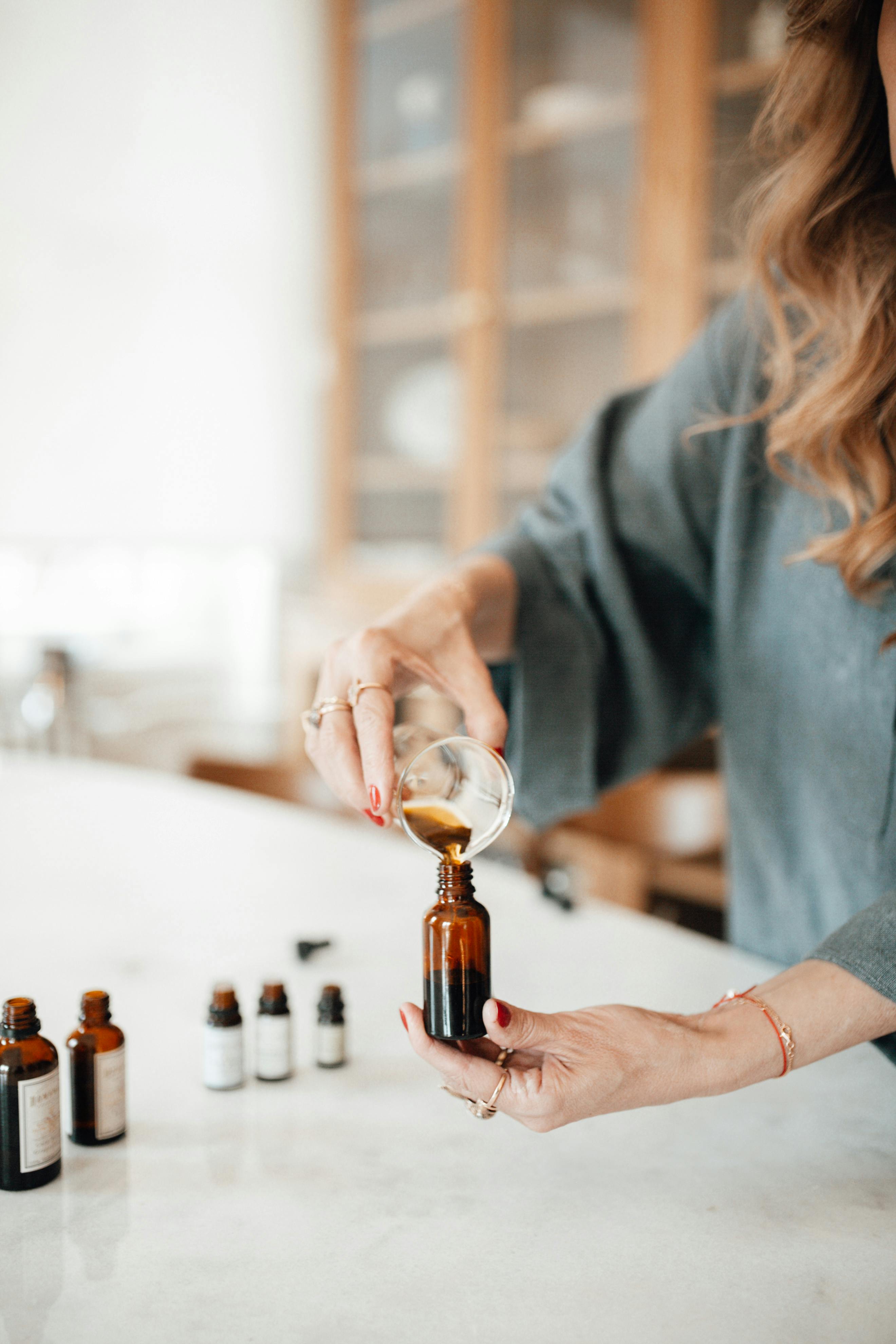
Geranium essential oil blends well with many other essential oils, including:
- Lavender essential oil has a calming and relaxing effect that complements the uplifting and balancing properties of geranium oil.
- Rose essential oil has a similar floral scent to geranium oil and can help to enhance its aroma.
- Clary sage essential oil has hormone-balancing properties that complement the hormone-balancing properties of geranium oil.
- Bergamot essential oil has a citrusy and slightly floral scent that pairs well with the sweet and floral aroma of geranium oil.
- Patchouli essential oil has a musky and earthy scent that can help to ground and balance the sweet and floral aroma of geranium oil.
- Lemon essential oil has a fresh and invigorating scent that complements the uplifting and energizing properties of geranium oil.
- Yarrow essential oil: these two essential oils can create a synergistic effect that enhances their individual benefits. The blend of geranium and yarrow essential oils can be particularly useful for promoting emotional balance, reducing stress, and promoting restful sleep. It can also be used in skincare to promote healthy-looking skin.
When blended together, these oils can create a unique and harmonious fragrance that offers a wide range of therapeutic benefits.
Bath Salts Recipe - Juniper and Geranium Essential Oil
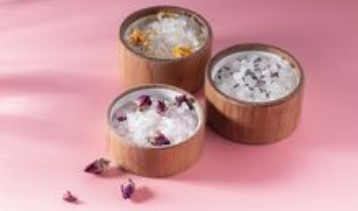
Here's one of my favourite recipes for making beautiful floral bath salts:-
In a bowl mix, 2 cups epsom salts, 1 cup course sea salt (pink Himalaya salt is lovely), 1/3 cup of baking soda, 10 drops geranium essential oil, 5 drops juniper berry oil. Store in a glass jar or any airtight container.
- Use about 1 cup of the bath salts in your warm bath water and stir until the salts are fully dissolved.
- Soak in the bath for at least 20-30 minutes to allow the Epsom salt and essential oils to work their magic.
- When finished, rinse off with warm water and pat dry with a towel.
Enjoy the relaxing and soothing benefits of geranium essential oil and Epsom salt in the comfort of your own home!
Why Is Geranium Known as a “Balancing Oil”?
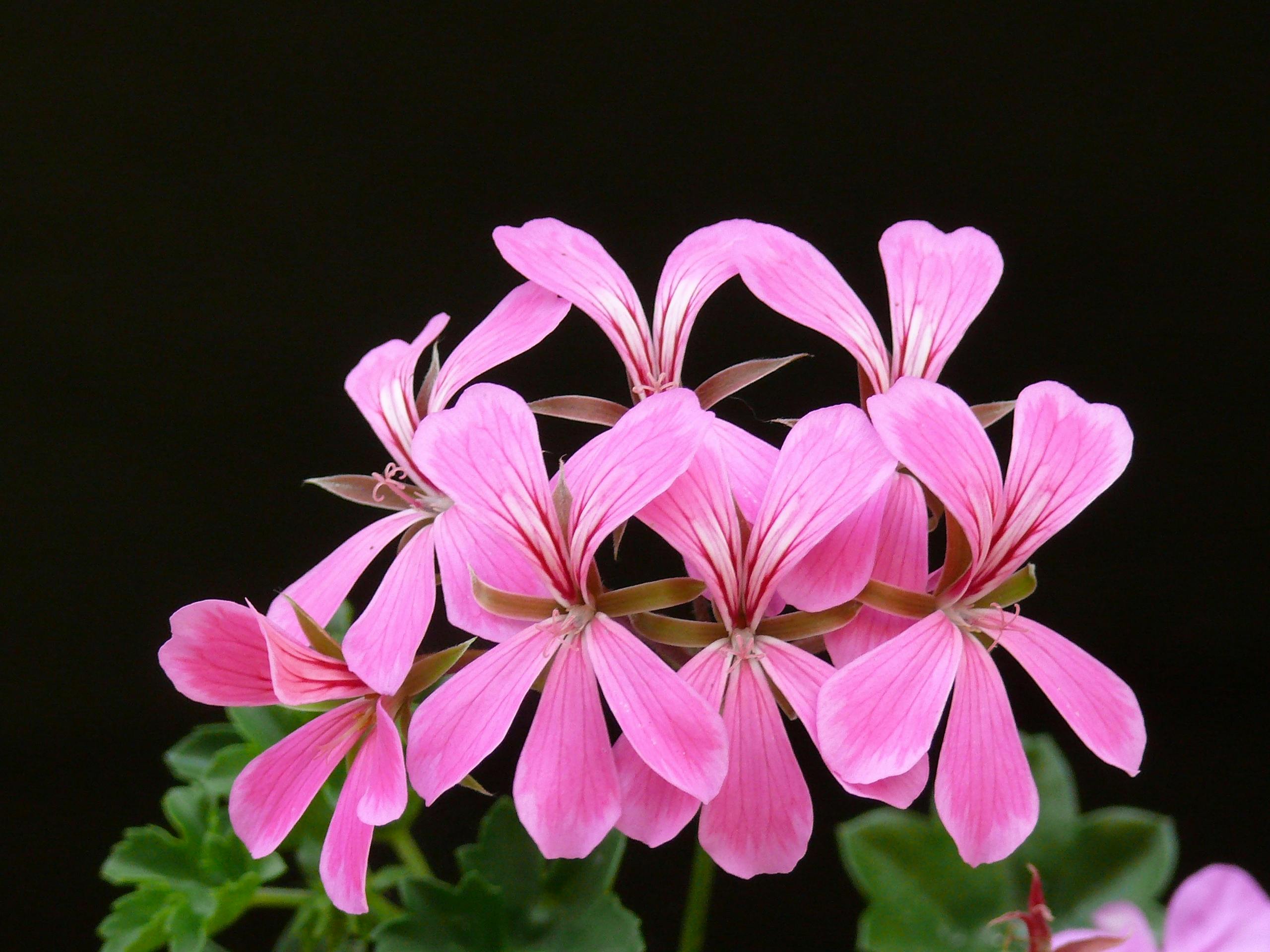
Geranium’s reputation as a balancing oil stems from its moderation. Historically, it was used wherever equilibrium—rather than intensity—was desired, making it a valuable intermediary between stimulating and calming botanicals.
Its enduring appeal lies in its adaptability rather than dominance.
In Closing
Geranium essential oil remains relevant because of consistency. Across cultures and centuries, it has been valued as a steady companion—supporting skin care, emotional balance, and aromatic wellbeing without overwhelming the senses.
As research continues to unfold, geranium essential oil remains a quiet bridge between traditional practice and modern wellness, appreciated for its versatility, gentleness, and enduring place in human culture.
If you want tips on natural wellness, you can get them straight to your inbox.

Enter your email below and I’ll share new articles, reflections, and practical insights as they’re published.
Side Thoughts
Thanks for visiting here. If you'd like to stay in touch with our regular updates, then we'd love you to subscribe to our Detox-For-Life Newsletter.
We are a participant in the Amazon Services LLC Associates Program, an affiliate advertising program designed to provide a means for us to earn fees by linking to Amazon.com and affiliated sites.
NEWSLETTER
New pages, fresh perspectives, and practical detox-for-life insights are shared first with newsletter readers.
Recent Articles


-
Fennel Essential Oil: Aromatic and Soothing Oil with Health Benefits
Apr 14, 26 03:36 PM
 Fennel Essential Oil - Learn how this sweet, licorice-like oil supports digestion and everyday wellness.
 -
Beyond Curry: Turmeric Essential Oil - Benefits, Uses & Safety Guide
Mar 16, 26 07:19 AM
Explore Turmeric Essential Oil - Spice up your life with this golden oil. From adding a zesty kick to your morning smoothie to giving your skin a radiant glow -
Liver Cleanse Guide: Support Your Liver the Natural Way
Mar 03, 26 01:37 AM
 Discover how a gentle liver cleanse supports detox, digestion, metabolism, clear skin and steady energy using food, herbs and simple daily habits.