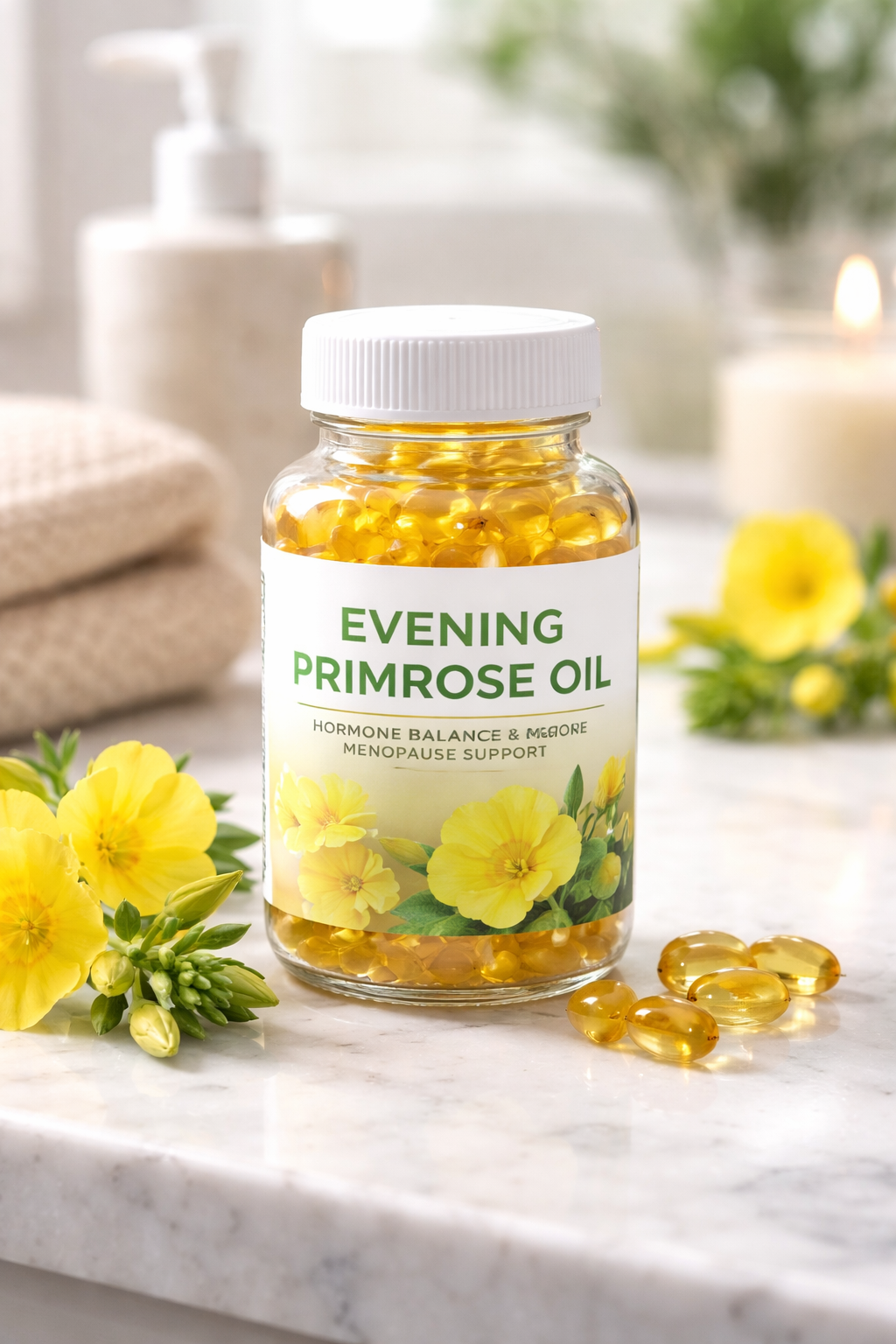
Evening Primrose Oil for Menopause:
A Natural Approach to Hormone Balance and Symptom Relief
Evening primrose oil for menopause is one of the most searched natural remedies by women looking for gentle, plant-based support during hormonal change. As estrogen and progesterone levels fluctuate and eventually decline, symptoms such as hot flushes, night sweats, anxiety, breast tenderness, mood swings, sleep disruption, and dry skin can become part of daily life.
Many women are not necessarily looking for a pharmaceutical solution — they’re looking for something that works with the body. This is where evening primrose oil for menopause has earned its reputation.
Rather than acting as a hormone itself, this golden oil provides gamma-linolenic acid (GLA), a fatty acid that supports the body’s own hormone-regulating pathways, inflammatory response, skin health, and nervous system balance.
This page answers the most common questions women ask when considering evening primrose oil for menopause, helping you understand whether it is the right fit for your journey.
Why Women Turn to Evening Primrose Oil for Menopause Support

Menopause is not a single moment — it is a process that can unfold over several years. During this time the body is adjusting to a new hormonal rhythm, and this adjustment often affects multiple systems at once.
Women commonly look for evening primrose oil for menopause support when they experience:
- Hot flushes and night sweats
- Breast tenderness or swelling
- Mood swings and anxiety
- Poor sleep
- Dry or thinning skin
- Joint discomfort
- Increased PMS symptoms during perimenopause
Evening primrose oil is not used because it “contains hormones,” but because it provides gamma-linolenic acid (GLA), which supports the body’s own regulatory mechanisms.
Is Evening Primrose Oil Good for Menopause?
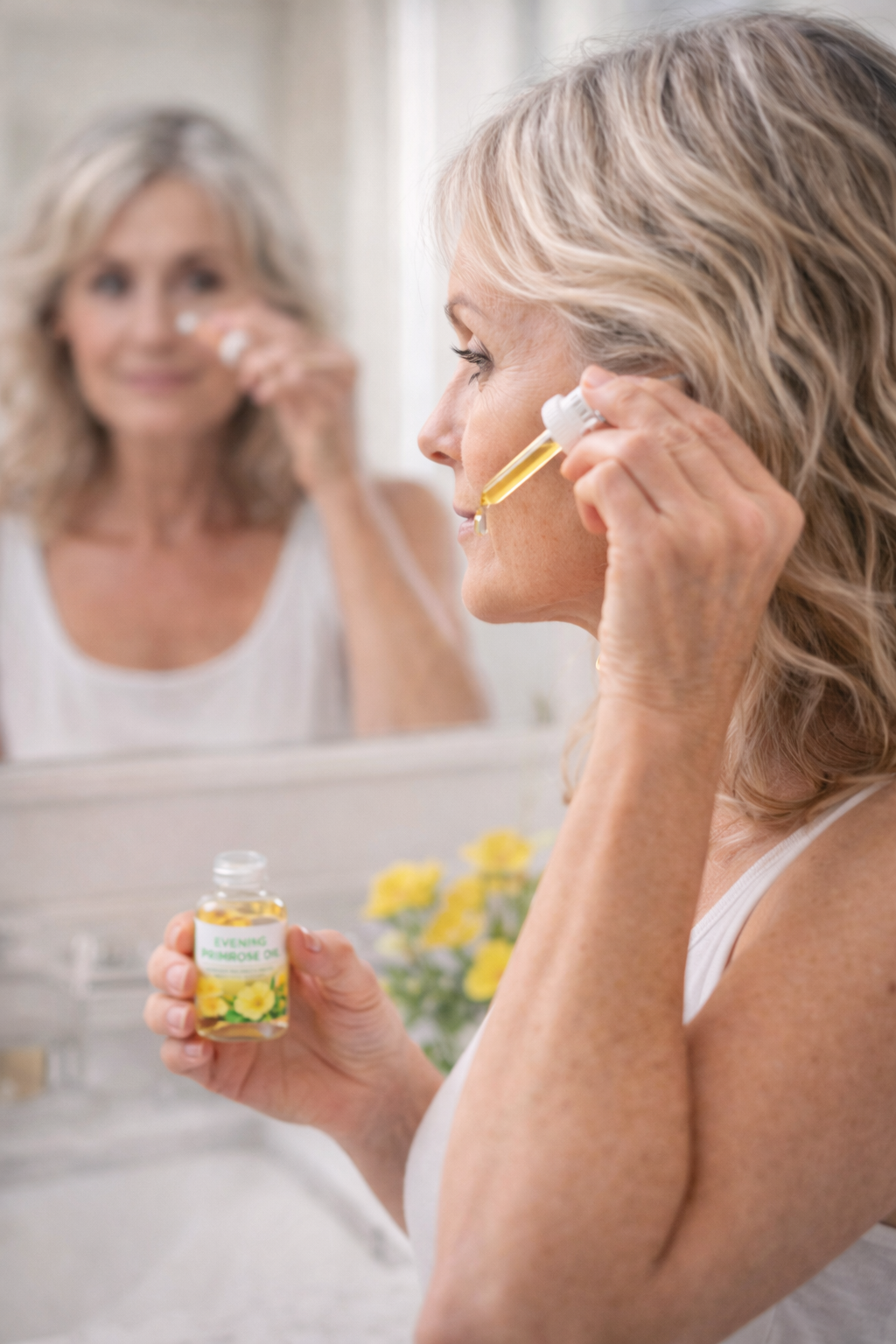
Evening primrose oil for menopause is most often used for its potential to support:
- Hot flushes and night sweats
- Breast tenderness
- Mood swings and irritability
- Hormonal skin changes
- Vaginal dryness
- Joint discomfort
Its value lies in its ability to nourish the body during a time when hormone production is changing, rather than forcing the body in a specific direction.
For women who want a natural, long-term support strategy, evening primrose oil for menopause is often used as part of a broader lifestyle approach that includes stress management, whole foods, and nervous system support.
Can Evening Primrose Oil Balance Hormones?

Evening primrose oil for menopause does not “contain hormones,” but it helps create the internal conditions that allow hormonal communication to function more smoothly.
GLA plays a role in the production of prostaglandins — signalling molecules that influence:
- Hormone responsiveness
- Inflammation levels
- Fluid balance
- Breast tissue sensitivity
- Mood regulation
During menopause, when the body is adapting to lower estrogen and progesterone levels, this support can make the transition feel less abrupt and more stable.
So while evening primrose oil for menopause is not a hormone replacement, it is widely used as a hormone-supportive nutrient.
Does Evening Primrose Oil Increase Estrogen?
This is one of the most common concerns.
Evening primrose oil for menopause does not directly increase estrogen levels.
Instead, it supports:
- Hormone receptor sensitivity
- Cellular health
- Anti-inflammatory pathways
For women who want to avoid anything that artificially raises estrogen, this is one of the reasons evening primrose oil for menopause is considered a gentle option.
Its role is supportive, not stimulatory.
Is Evening Primrose Oil Safe During Perimenopause?
Perimenopause is often when symptoms are at their most unpredictable. Cycles may still be present, but:
- Breast tenderness increases
- Mood swings intensify
- Sleep becomes disrupted
- Anxiety appears for the first time
Evening primrose oil for menopause is frequently introduced during perimenopause because this is when the body is most responsive to nutritional support.
It can be especially helpful during this phase for:
- Cyclical breast pain
- PMS-like symptoms that worsen in the 40s
- Skin and hair changes
- Emotional sensitivity
Because it works gradually and supports the body rather than overriding it, many women find it suitable for long-term use through the perimenopause transition.
How Long Does Evening Primrose Oil Take to Work for Menopause?
Evening primrose oil for menopause is not an instant-relief supplement.
It works by nourishing fatty acid stores and supporting cellular processes, which takes time.
Typical timelines reported:
- 2–4 weeks → early skin and breast tenderness changes
- 6–8 weeks → mood and inflammatory support
- 8–12 weeks → deeper hormonal rhythm support
Consistency is key. This is why evening primrose oil for menopause is often described as a foundational supplement, not a quick fix.
Best Time to Take Evening Primrose Oil for Hormones
There is no single “perfect” time, but evening primrose oil for menopause is most commonly taken:
- With meals (for better absorption)
- Split into morning and evening doses for steady support
Some women prefer taking it in the evening because of its calming and skin-supportive effects, while others take it earlier in the day for consistency.
The most important factor is regular daily use.
Evening Primrose Oil Dosage for Menopause
Dosage varies depending on the individual and the concentration of the oil, but commonly used ranges for evening primrose oil for menopause fall between:
1,000 mg – 3,000 mg per day
This is usually divided into two or three doses.
Lower doses may support:
- Skin and mild symptoms
Higher daily intake levels are often used for:
- Breast tenderness
- Inflammatory symptoms
- Mood support
The key is starting low and increasing gradually while observing how your body responds.
Evening Primrose Oil for Breast Pain in Menopause
Breast tenderness is one of the most overlooked menopause symptoms.
Evening primrose oil for menopause is widely known for its use in:
- Cyclical breast pain during perimenopause
- Persistent breast sensitivity after periods stop
GLA helps regulate the inflammatory response in breast tissue and supports fluid balance, which may reduce the feeling of swelling, heaviness, and soreness.
For many women, this is one of the first noticeable benefits.
Evening Primrose Oil vs Black Cohosh
These two are often compared, but they work very differently.
Evening primrose oil for menopause:
- Nutritional support
- Long-term hormone pathway nourishment
- Skin, breast, and mood focus
Black cohosh:
- Acts more directly on hot flush pathways
- Often used for short-term symptom relief
Many women choose evening primrose oil for menopause when they want a daily, food-based approach rather than a herb that acts more like a targeted intervention.
They are not competitors — they are different tools.
Who Should Not Take Evening Primrose Oil?
Evening primrose oil for menopause is generally well tolerated, but it may not be suitable for:
- People taking certain medications that affect blood clotting
- Those with seizure disorders
- Individuals preparing for surgery
As with any supplement, personal health history should always guide your decision.
What Real Hormonal Support Feels Like
When evening primrose oil for menopause is taken consistently, the changes are often described as:
- Feeling less reactive to stress
- Having more comfortable breasts
- Noticing calmer skin
- Experiencing more emotional steadiness
- Sleeping more deeply
These are not dramatic shifts — they are signs that the body is receiving the nourishment it needs.
Choosing a Quality Evening Primrose Oil for Menopause
Not all oils are equal. A good quality evening primrose oil for menopause should be:
- Cold pressed
- Fresh and properly stored
- Free from unnecessary additives
Quality matters because the fatty acids are delicate and easily damaged by heat, light, and poor processing.
Why Evening Primrose Oil for Menopause Fits a Holistic Lifestyle
One of the reasons evening primrose oil for menopause continues to grow in popularity is that it aligns with a broader shift toward:
- Food-based supplementation
- Nervous system support
- Gentle hormone care
- Long-term wellness rather than quick fixes
It is not about forcing the body back to its reproductive years.
It is about supporting the body through its next phase.
What to Expect When Using Evening Primrose Oil for Menopause
Women who use it consistently often report:
- More comfortable breasts
- Softer, more hydrated skin
- Improved emotional steadiness
- Less reactivity to stress
- A greater sense of internal balance
These changes tend to build gradually and feel natural rather than dramatic.
A Holistic Approach to Menopause Support

Evening primrose oil for menopause works best as part of a wider supportive lifestyle that includes:
- Balanced nutrition
- Stress regulation
- Restorative sleep
- Gentle movement
- Nervous system care
It is not about forcing the body to behave differently.
It is about giving the body what it needs to move through this phase with greater ease.
A Gentle, Long-Term Tool for Hormonal Transition
Evening primrose oil for menopause is not a miracle cure — and it doesn’t need to be.
Its role is deeper than symptom suppression.
It is a daily act of nourishment for:
- Changing hormones
- The nervous system
- The skin
- Inflammatory balance
And for many women, that steady, supportive approach is exactly what makes this phase of life feel more manageable and more empowered.
Explore More Ways Evening Primrose Oil Supports Hormonal Health
1. Evening Primrose Oil for Hair Loss
If you’re also noticing thinning hair during hormonal changes, you may find our guide on evening primrose oil for hair loss helpful, as it explores how essential fatty acids support scalp health and the hair growth cycle.
2. Evening Primrose Oil for Acne
Hormonal breakouts don’t always end in your 20s — learn how this same nutrient supports skin balance in our article on evening primrose oil for acne and adult hormonal skin.
If you want tips on natural wellness, you can get them straight to your inbox.

Enter your email below and I’ll share new articles, reflections, and practical insights as they’re published.
Side Thoughts
Thanks for visiting here. If you'd like to stay in touch with our regular updates, then we'd love you to subscribe to our Detox-For-Life Newsletter.
We are a participant in the Amazon Services LLC Associates Program, an affiliate advertising program designed to provide a means for us to earn fees by linking to Amazon.com and affiliated sites.
NEWSLETTER
New pages, fresh perspectives, and practical detox-for-life insights are shared first with newsletter readers.
Recent Articles


-
Evening Primrose Oil For Acne
Feb 19, 26 01:51 PM
 Discover how Evening Primrose Oil for acne supports clearer, calmer skin. Learn top types, dosages, side effects, and how to include it in your routine.
 -
Evening Primrose Oil for Hair Loss
Feb 19, 26 12:51 PM
 Discover how evening primrose oil for hair loss supports scalp health, reduces shedding and promotes stronger, shinier hair naturally.
 -
Evening Primrose Oil for Menopause
Feb 19, 26 03:55 AM
 Evening primrose oil for menopause may support hormone balance, breast tenderness, mood, and hot flushes. Learn benefits, dosage, and how long it takes to work.